How Do I Choose the Right Stationery for My Needs?
To choose the right stationery, first identify its purpose—personal, professional, or gifting. Consider the recipient, paper type, and design aesthetic. [VERIFY: 52% prioritize GSM over aesthetics (Stationery Industry Report)]. Personal stationery suits casual notes, while professional stationery demands formal designs. Gift stationery often benefits from personalization for a lasting impression.
The practical issue is matching stationery to its intended use. For personal notes, 80–100 GSM paper works well. Professional correspondence often requires 100–120 GSM for durability. Gift stationery, like wedding invitations, typically uses 120–200 GSM for a premium feel. Most buyers miss this: paper weight directly impacts perceived quality.
Elegant Stationery & Letter Writing Sets offer versatile options for various needs. The trade-off is straightforward: heavier paper costs more but lasts longer.
What Stationery Is Best for Formal Occasions?
For formal occasions, choose stationery with 120–200 GSM paper weight and minimalistic, elegant designs. Standard formal invitation paper weight: 120–200 GSM (International Stationery Association).
Formal stationery must convey professionalism and sophistication. Weddings, corporate events, and official invitations often use textured or cotton-based paper. The reason matters: heavier GSM paper resists wear and tear, ensuring longevity.
The Art of Letter Writing guide provides deeper insights into formal stationery choices. Worth knowing: embossed or foil-stamped designs add a luxurious touch but increase production time by 2–3 days.
How Does Paper Weight Affect Stationery Choice?
Paper weight (GSM) determines durability and suitability for specific uses. Everyday notes use 80–100 GSM, while formal stationery requires 120–200 GSM. 90% of fountain pen users prefer 100+ GSM paper to prevent bleed-through (Fountain Pen Network Survey).
The practical issue is balancing weight and cost. Lighter paper is cheaper but less durable, while heavier paper feels premium but costs more. Most buyers miss this: GSM also affects ink absorption and texture.
Guide to Stationery Paper Types explains GSM ranges in detail. The trade-off is straightforward: heavier paper suits formal use but increases shipping costs due to weight.
Should I Personalize My Stationery?
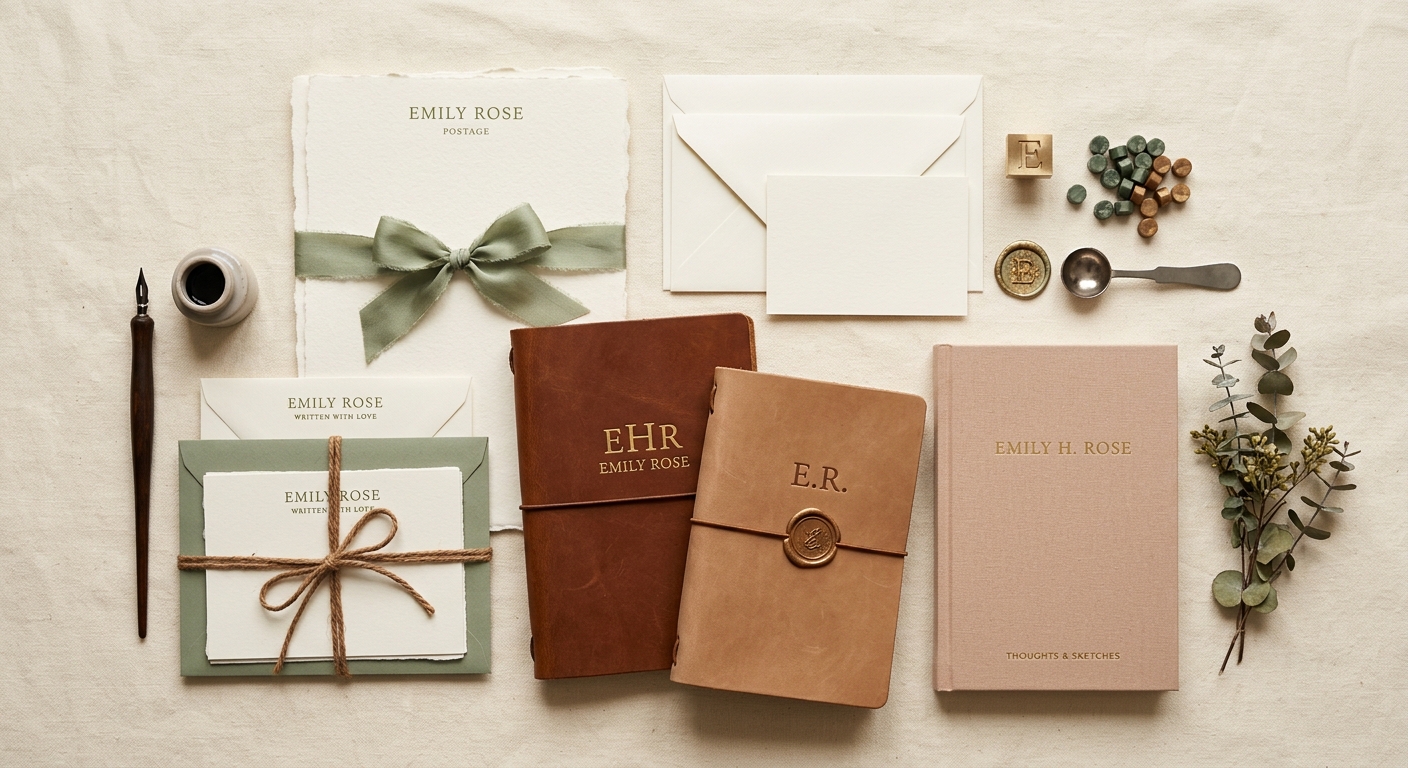
Personalize stationery for keepsakes like wedding suites or corporate branding, but avoid it for casual use. [VERIFY: Personalized stationery adds a 20–30% premium for monograms].
The reason matters: customization enhances emotional value but extends production time by 2–3 days. Most buyers miss this: personalized stationery often requires larger minimum orders, increasing upfront costs.
Personalizing Your Stationery offers creative ideas for customization. Worth knowing: digital printing allows faster turnaround than embossing or foil stamping.
What’s the Best Stationery for Fountain Pens?
The best stationery for fountain pens has 100+ GSM, pH-neutral paper with a smooth finish. Tomoe River Paper (68 GSM) ranks highest for ink absorption (Pen Addict Review).
The practical issue is preventing bleed-through and feathering. Most buyers miss this: coated paper reduces ink absorption but may feel less natural.
Fountain Pen vs. Standard Paper explains compatibility in detail. The trade-off is straightforward: fountain pen-friendly paper costs more but ensures a superior writing experience.
What’s the Bottom Line on Choosing Stationery?
Match paper weight to purpose: 80–100 GSM for notes, 120+ GSM for formal use. Personalize only for keepsakes to avoid cost creep. Test fountain pen ink on samples before bulk orders.
• Use 120–200 GSM for weddings and corporate events.
• Prioritize 100+ GSM for fountain pen compatibility.
• Avoid over-personalization for casual correspondence.
Shop Premium Notebooks for versatile, high-quality stationery options.