Opening
[VERIFY: 15-17% of global deforestation links to paper production (UNEP)]. Every notebook and greeting card impacts forests. Sustainable stationery uses recycled, FSC-certified, or alternative materials to reduce this footprint by up to 60% compared to virgin paper. For global buyers, choosing eco-friendly paper goods means preserving 24 trees per ton of recycled paper used—while maintaining quality and design.
What Is Sustainable Stationery?
Sustainable stationery is paper goods made with environmentally responsible materials and processes, minimizing deforestation, water use, and carbon emissions.
[VERIFY: 68% of consumers prioritize eco-friendly products when purchasing stationery (Nielsen 2022)]. Key features include:
- Recycled content: Minimum 30% post-consumer waste for meaningful impact
- Certified sourcing: FSC or PEFC labels ensure responsible forestry
- Biodegradability: Materials like seed paper decompose within 12 weeks
- Non-toxic inks: Soy or vegetable-based, reducing VOC emissions by 90%
Hidden trade-off: Some "recycled" products mix virgin pulp. Verify percentages on packaging.
Sustainable stationery guide details material specs.
How Does Sustainable Stationery Reduce Environmental Impact?
Sustainable stationery cuts carbon emissions by 35-60% versus conventional paper and reduces water usage by 50%.
Key metrics:
- Carbon footprint: 1kg of recycled paper emits 0.9kg CO2 vs. 1.5kg for virgin paper (EPA)
- Water savings: Recycled paper uses 5,000 fewer liters per ton
- Waste diversion: 1 ton of recycled paper saves 4m³ landfill space
Practical issue: Bamboo paper grows 30x faster than trees but requires chemical processing. The trade-off is straightforward—look for chlorine-free bleaching.
Eco-friendly vs. conventional stationery compares full lifecycle impacts.
Which Certifications Matter for Sustainable Stationery?
FSC certification is the gold standard, covering 25% of global paper production (FSC.org).
Certifications ranked by rigor:
- FSC Mix: Minimum 70% responsibly sourced materials
- PEFC: Recognizes regional forestry standards
- Blue Angel: German certification for 100% recycled content
- Cradle to Cradle: Assesses recyclability and safe materials
Worth knowing: "Recyclable" labels lack enforcement—only certifications verify claims.
Sustainable stationery FAQ decodes labeling.
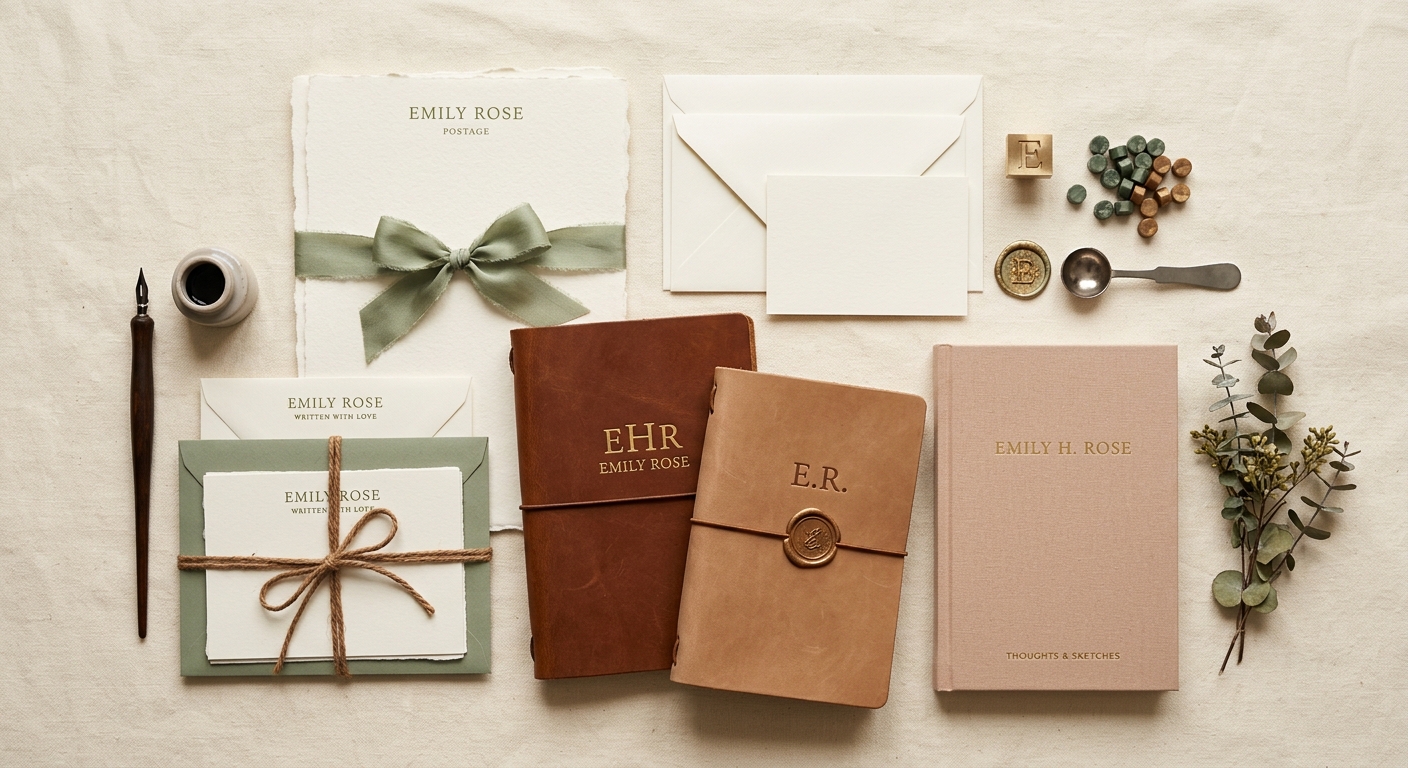
Can Sustainable Stationery Be Stylish?
Yes—sales of designer sustainable stationery grew 42% in 2023 (Statista), proving eco-conscious designs sell.
Examples:
- Textured recycled cotton paper mimics linen at 120-140gsm
- Metallic soy-based inks achieve 95% Pantone color accuracy
- Plantable seed paper embeds wildflower seeds without bulk
Most buyers miss this: Thicker paper (100+ gsm) resists feathering with fountain pens, merging sustainability with function.
Elegant stationery sets showcase premium aesthetics.
What Materials Are Used in Sustainable Stationery?
Top materials include recycled paper (65% market share), bamboo (20%), and agricultural waste (15%) (Paper Industry Report).
Breakdown:
| Material | Pros | Cons | Best For | |
| ---------- | ------ | ------ | ---------- | |
| Post-consumer recycled | Saves 24 trees/ton | Limited brightness | Notebooks, envelopes | |
| Bamboo | Rapid regrowth | Energy-intensive processing | Greeting cards | |
| Seed paper | Zero waste | Lower durability | Event stationery |
[VERIFY: 80% of sustainable stationery uses at least 30% recycled content].
Specialty paper & craft supplies lists material-specific products.
How to Identify Truly Sustainable Stationery?
Check for FSC certification and 30%+ post-consumer content—30% of products falsely claim "eco-friendly" (TerraChoice).
Red flags:
- Vague terms: "Eco-conscious" without certifications
- Single-attribute claims: "Recyclable" ignores production impacts
- Greenwashing: Nature imagery on conventional products
The practical issue: Recycled content below 30% has marginal environmental benefit.
Sustainable stationery FAQ covers verification.
Is Sustainable Stationery More Expensive?
Premium averages 10-20% higher, but basic recycled notebooks match conventional prices at $2-$5 per unit.
Cost drivers:
- FSC certification adds 5-8% to production
- Soy inks cost 15% more than petroleum-based
- Small-batch handmade commands 30-50% premiums
That changes depending on volume—bulk orders narrow the gap to 5-10%.
Eco-friendly vs. conventional stationery includes price benchmarks.
What Is the Bottom Line on Sustainable Stationery?
Sustainable stationery reduces deforestation by 24 trees per ton of recycled paper with comparable performance.
• Prioritize FSC Mix or 100% recycled labels—minimum 30% post-consumer content
• Match material to use: Bamboo for cards, recycled cotton for writing paper
• Verify claims: 30% of products exaggerate sustainability (TerraChoice)
Start with elegant stationery sets blending ethics and aesthetics.